
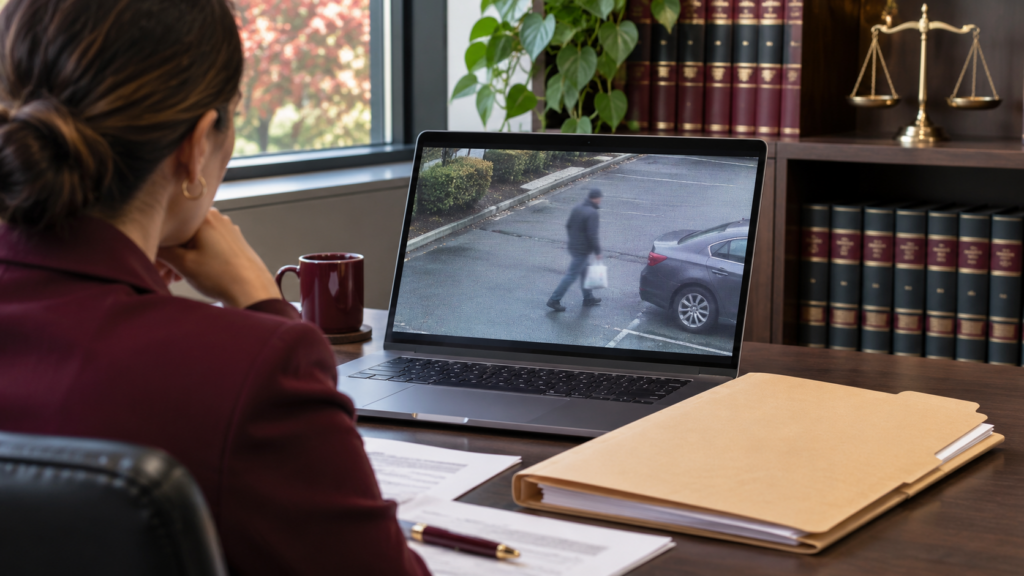
After a collision, a video may show an injured person carrying groceries, driving or bending to reach a shelf. Those activities can tell a court something about what the person can do. But the questions in a personal injury claim often go further. How long can the person keep doing the activity? Can they repeat it throughout a workday? What symptoms or limitations follow?
In Johal v. Doe, 2024 BCSC 1597, Brij Mohan & Associates represented a woman injured in a transport truck rollover. The British Columbia Supreme Court considered surveillance footage alongside other evidence and awarded her $645,857.74 in damages. The case shows why the details of a person’s job and daily routine can matter to a claim.
What happened in Johal v Doe
The plaintiff was asleep in the truck’s sleeper compartment when it left the road and rolled onto its side in British Columbia. She suffered a serious wrist fracture that required surgery, as well as injuries to her foot, neck and back. The remaining defendants admitted liability. The trial focused on how the injuries affected her and what compensation the evidence supported.
Before the collision, the plaintiff had worked as a care aide and recreation therapist. Her prior work included helping patients move and spending long periods on her feet. After the crash she eventually returned to part-time care aide work. The parties disagreed about whether she could sustain that work on a full-time schedule.
What the surveillance footage showed
The defence relied on footage showing the plaintiff driving, shopping for a period of time, bending and lifting a small number of items of moderate weight. The judge accepted that the video showed she could do those things. The footage mattered because it helped the court assess her abilities against the limitations she described.
The judge also considered what the video could establish about her ability to work. Care aide duties involved moving patients, staying on her feet through an eight-hour shift and repeating those demands on consecutive days. The footage did not show her performing that schedule. The judge weighed it alongside the other evidence and found that she could not reasonably sustain full-time work as a care aide.
How the court assessed credibility and work capacity
The court examined inconsistencies in the plaintiff’s evidence, including how broadly she described her difficulty with housework. The judge accepted that she could do light household tasks for short periods and treated parts of her account with caution. Where possible, the judge looked to other evidence for confirmation.
Medical and vocational evidence gave the court more detail about her function. For example, the demands of assisting a patient who needs support can differ significantly from lifting a grocery bag. A job may also require someone to keep performing the same movements after symptoms build. Describing the frequency, duration and physical demands of the work helps explain why a person might manage some activities and still struggle to maintain a full schedule.
How the court reached the damages award
The court assessed total damages at $645,857.74. That included $160,000 in non-pecuniary damages for harm such as pain and suffering, $202,197 for past wage loss and $206,721 for reduced future earning capacity. The balance covered loss of homemaking capacity, future care and agreed expenses. The full breakdown appears in paragraph 324 of the court’s reasons in Johal v. Doe.
Past wage loss and future earning capacity addressed different periods. For past losses, the court considered the work the plaintiff likely would have done before trial had the collision not happened. For future losses, it considered how her ongoing limitations affected her ability to earn. The court also assessed which future care expenses the evidence supported. You can explore other published outcomes in our personal injury case studies.
What records can help explain an injury claim?
If injuries have changed how you work or manage daily activities, concrete details help a lawyer understand the impact. A job description, shift schedule or record of modified duties can show which tasks changed and when. Pay statements may help document missed hours or reduced earnings. Treatment records can show when symptoms were reported and what restrictions or recommendations the treating providers noted.
It can also help to describe ordinary activities precisely. Someone might still cook a meal if they can sit between tasks or get help lifting heavy pots. Another person might manage one short shopping trip and need time to recover afterward. These examples give context to the activity itself and help explain how often the person can do it. If there is a video or photograph that seems inconsistent with a reported limitation, discuss the circumstances with your lawyer.
If you have returned to work, keep track of any accommodations. For example, you may be working fewer consecutive shifts, sharing lifting duties or taking longer breaks between physical tasks. A return-to-work plan or messages confirming those changes can help show what made the return possible and what challenges remain.
What this means for injured people in Brampton
Johal v. Doe was decided in British Columbia. The award reflects the evidence and law applicable to that case. For an Ontario collision, a review should account for Ontario’s insurance system and the accident’s circumstances. Our Brampton car accident lawyers can explain the options available after a collision.
If you are preparing for a consultation, bring what you already know about the accident, your treatment, your job, and any changes to your work or daily routine. The personal injury lawyers at Brij Mohan & Associates in Brampton can review those records with you and explain what other information may help assess your claim. Request a confidential consultation to discuss your circumstances.